Activated Carbon Gas Adsorbent Sheet for Outgassing Control
- Item No.
- UF-ACS
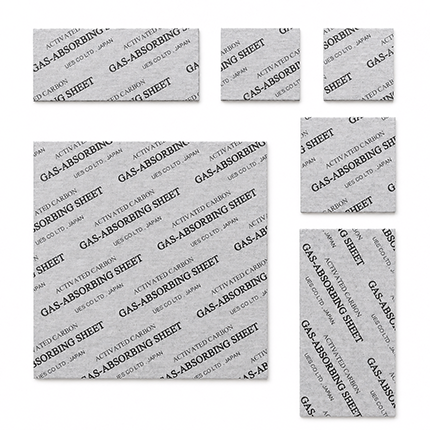
Protect sensitive components from VOCs, siloxanes, organic acids, and other airborne contaminants — with a thin, easy-to-install adsorbent sheet.
Outgassing inside sealed packaging can lead to corrosion, surface contamination, odors, fogging, and other quality issues in sensitive components.
UF-ACS is a thin activated carbon gas adsorbent sheet designed to capture VOCs and other gas-phase contaminants released from resins, adhesives, packaging materials, and component materials.
At only approximately 1.3 mm thick, UF-ACS fits easily into packaging and enclosed spaces without taking up valuable room. Simply place it together with the product to help reduce exposure to harmful gases during transportation and long-term storage.
Ideal for semiconductors, electronic components, sensors, optical components, precision devices, and other products where clean storage and packaging environments matter.
Features
- Broad-spectrum adsorption for critical gas contaminants
- High-performance coconut-shell activated carbon adsorbs a wide range of gas-phase contaminants, including VOCs, siloxanes, organic acids, and sulfur-containing gases.
- Ultra-thin, space-saving design — approx. 1.3 mm
- Designed for packaging and compact enclosures where space is limited. UF-ACS can be placed close to the product without significantly increasing package volume.
- Clean handling with reduced activated-carbon particle shedding
- The activated-carbon-impregnated PET nonwoven fabric is protected on both sides with water-resistant paper, helping minimize carbon dust and particle dispersion.
- Easy to use — simply place and seal
- No equipment or complicated installation is required. Place UF-ACS inside the package or enclosed container and seal it together with the product.
- Custom sizes and printing for your packaging
- Custom dimensions can be supplied to match your product and packaging design. Logo printing, handling instructions, and other custom printing are also available.
Verified Gas Removal Performance
| Target Gas | Initial Concentration | Elapsed Time | Size Example 40 X 40 mm | Size Example 30 X 30 mm | ||
|---|---|---|---|---|---|---|
| Measured Value | Removal Rate | Measured Value | Removal Rate | |||
| Siloxane (D4) Octamethylcyclotetrasiloxane |
6683 (GC peak area) |
After 48 hours |
< 100 (GC peak area) |
≥99% |
< 100 (GC peak area) |
≥99% |
| Acetic acid | 2ppm | After 48 hours | < 0.2 | ≥99% | < 0.2 | ≥99% |
| Formic acid | 0.5ppm | After 48 hours | < 0.2 | ≥99% | < 0.2 | ≥99% |
| Hydrogen sulfide | 2.3ppm | After 48 hours | < 0.05 | ≥99% | < 0.05 | ≥99% |
| Toluene | 2.28ppm | After 48 hours | < 0.1 | ≥99% | < 0.1 | ≥99% |
[Test Overview]
Test location: UES Wakayama Factory Laboratory
Test method: ① Place the sample in a polyethylene bag (200 × 300 mm), fill the bag with air using an air pump, and heat-seal it. ② Inject the test reagent with a syringe to obtain the specified concentration. ③ After 48 hours, measure the gas concentration.
Where Outgassing Can Affect Product Quality
| Target Product | Examples of Main Sources | Potentially Problematic Gases / Compounds | Potential Quality Risks |
|---|---|---|---|
| Semiconductors / IC chips | Resin encapsulants, trays, adhesives, labels, cushioning materials | Organic acids, VOCs, siloxanes, sulfur-containing gases | Corrosion of electrodes and terminals, increased contact resistance, surface contamination |
| MEMS / Sensors | Silicones, adhesives, resin housings, foam materials | Siloxanes, VOCs, organic acids, plasticizers | Deposition and contamination on sensor surfaces, reduced sensitivity, optical contamination |
| Optical sensors / Camera components | Adhesives, resins around lenses, packaging films | Siloxanes, plasticizers, low-molecular-weight VOCs | Fogging of lenses and windows, film-like deposits, reduced transmittance |
| LEDs / Lasers / Optoelectronic devices | Silicone encapsulants, resins, adhesives | Sulfur-containing gases, VOCs, siloxanes | Discoloration and corrosion of metal parts, reduced reflectivity, degraded optical performance |
| Electrical contacts / Connectors | Rubber, corrugated cardboard, adhesives, wood-based packaging materials | H₂S, SO₂, organic acids | Corrosion of Ag, Cu, etc.; increased contact resistance |
| Printed circuit boards / Electronic modules | Flux residues, resins, adhesives, packaging materials | Organic acids, amines, VOCs | Corrosion of Cu and other metals, surface contamination, impact on insulation reliability |
| Batteries / Precision electronic components | Resins, adhesives, packaging materials, compounds originating from component materials | Organic solvents, VOCs, acidic compounds | Corrosion of electrodes and terminals, surface contamination, effects on surrounding components |
* Adsorption performance for target gases and compounds varies depending on the operating environment, concentration, temperature, humidity, and other conditions.
-
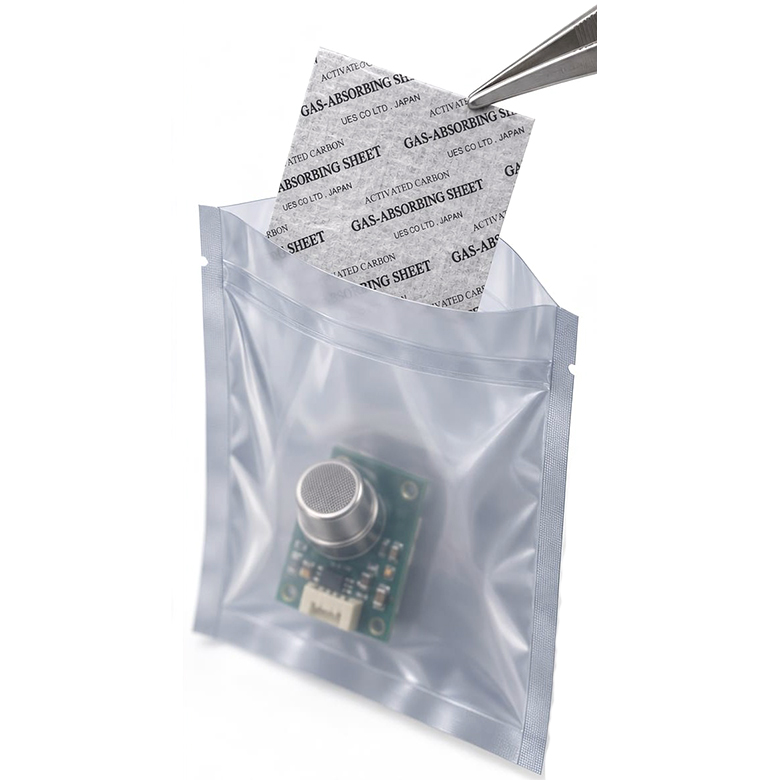
Reference Image 1
-
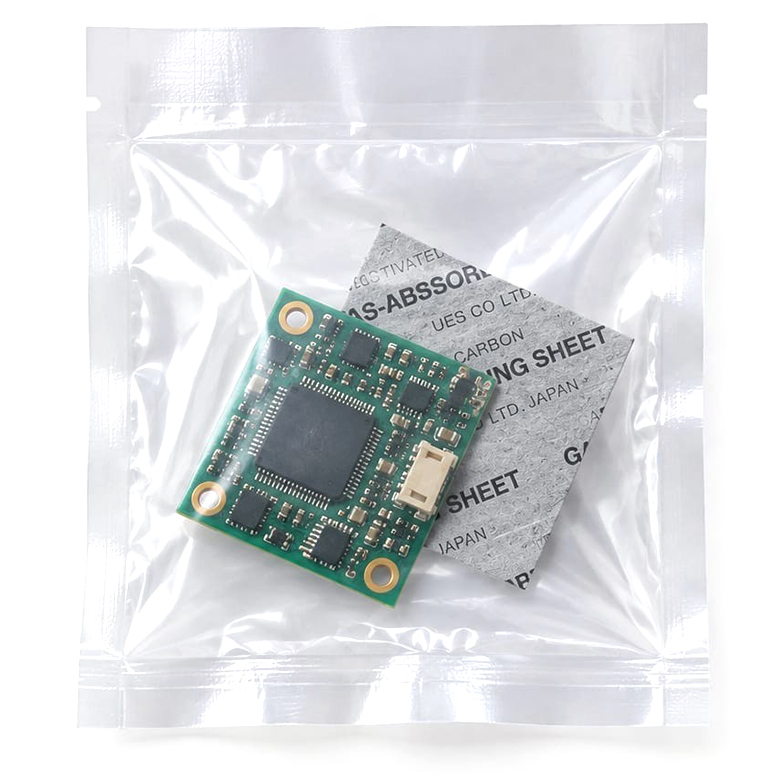
Reference Image 2
-
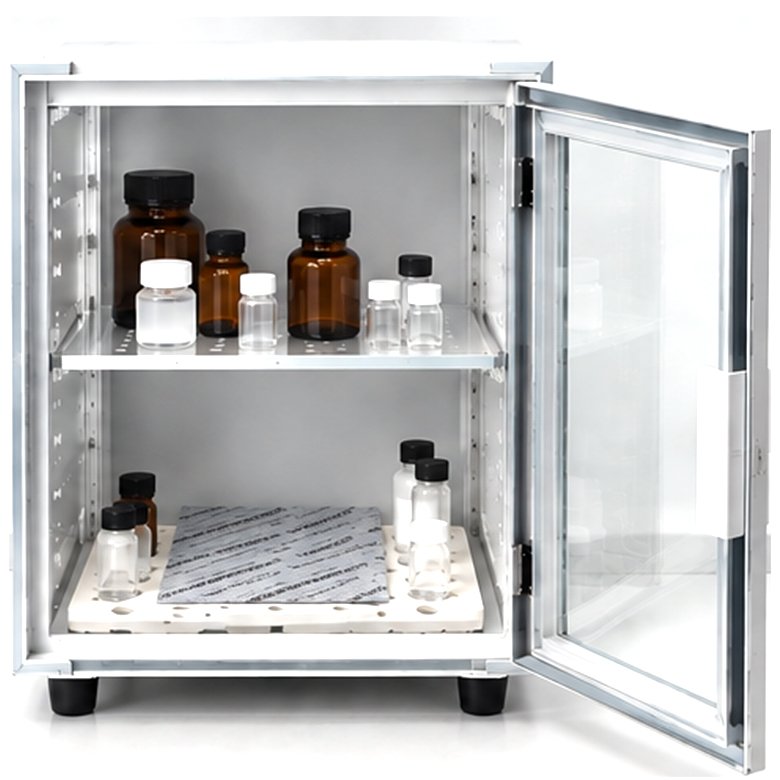
Reference Image 3
Recommended Applications
- Sealed packaging for semiconductors, ICs, electronic components, and precision devices
- MEMS, sensors, optical components, cameras, LEDs, lasers, and optoelectronic devices
- Analytical instruments and other equipment sensitive to gas-phase contamination
- Desiccators, storage containers, and other enclosed spaces requiring VOC and odor control
- Transportation and long-term storage where outgassing-related quality deterioration is a concern
Product Specifications
| Construction: | Water-resistant paper / Activated-carbon-impregnated PET nonwoven fabric / Water-resistant paper |
|---|---|
| Thickness: | Approx. 1.3 mm |
| Size: | Custom sizes available to match your product and packaging requirements |
| Customization: | Logo printing, handling instructions, and other custom printing available upon request |